
In Russia, the escort business exists in a legal gray zone that confuses even locals. There’s no explicit law that says "prostitution is illegal," but every activity around it-advertising, soliciting, operating a brothel, or even accepting payment for companionship-is tightly controlled under vague public order and administrative codes. This creates a system where services are offered, but never openly acknowledged. Women who work as escorts often rely on word-of-mouth referrals, encrypted apps, and private apartments to avoid police attention. The same rules don’t apply uniformly across cities; Moscow and St. Petersburg have stricter enforcement than smaller towns, but the risk remains high regardless of location.
Some people searching for companionship abroad turn to services like escord dubai, where the legal framework is clearer-even if culturally different. In Dubai, for example, while prostitution is illegal, escort agencies operate under the guise of "companion services," and clients are rarely prosecuted if no sexual exchange is proven. This contrast highlights how legal ambiguity in Russia forces the industry underground, while other countries manage it through enforcement loopholes. The difference isn’t just about law-it’s about social tolerance, economic pressure, and how gender roles are enforced.
What Exactly Is an Escort in Russia?
An escort in Russia isn’t just someone who provides sexual services. The role often includes dinner dates, event attendance, travel companionship, or even emotional support. Many women enter this work not because they want to, but because they can’t find other jobs that pay enough. A university graduate in Yekaterinburg might earn 40,000 rubles a month as a receptionist. As an escort, she could make 15,000 rubles in a single evening. The choice isn’t glamorous-it’s survival.
The term "escort" itself is used deliberately to avoid legal traps. Advertisements never mention sex. Instead, they use phrases like "discreet company," "evening companion," or "cultural tour guide." Some profiles list hobbies-reading, wine tasting, classical music-to sound legitimate. Police raids often target ads that use direct language, so the language is carefully curated. Even photos are staged: no lingerie, no suggestive poses, just stylish outfits and smiles in cafes or art galleries.
How the Law Actually Works
Russia’s legal system doesn’t criminalize the act of selling sex. It criminalizes the infrastructure around it. Article 6.11 of the Administrative Code punishes "organization of prostitution," which includes managing, advertising, or renting space for such activities. That means the escort herself might walk away with a fine, but the person who posted her ad online, rented the apartment, or took a cut of her earnings could face jail time.
In 2023, a court in Novosibirsk sentenced a man to two years in prison for running a Telegram channel that connected clients with women. The women involved weren’t charged. The court ruled they were "victims of exploitation." That’s the pattern: the state targets middlemen, not the workers. It’s a strategy that looks like protection but actually makes the industry more dangerous. Without organized channels, women are forced to work alone, with no safety nets, no backup, and no way to report abuse without risking arrest themselves.
Social Stigma and Public Perception
Public opinion in Russia is harsh. Women who work as escorts are often labeled as "immoral," "degraded," or "corrupt." Even their families may disown them. Social media posts about escorting are routinely deleted, and hashtags like #escortrussia are blocked. The Orthodox Church openly condemns the practice, and state media occasionally runs features on "the tragedy of modern youth," showing tearful mothers whose daughters became escorts.
But behind closed doors, attitudes are more complicated. A 2024 survey by the Levada Center found that 37% of Russian men between 30 and 50 admitted to hiring an escort at least once. Only 8% of them felt guilty. The disconnect is stark: people condemn the practice publicly, but quietly rely on it privately. This hypocrisy fuels the underground nature of the industry. No one wants to admit they use it, so no one pushes for reform.

How Women Stay Safe
Survival in this industry depends on strict routines. Most women avoid meeting clients in hotels. Instead, they use rented apartments under false names, often paid in cash. They screen clients through voice calls before meeting. Many use burner phones and delete messages after each appointment. Some carry pepper spray. Others record audio of every interaction.
There’s also an informal network. Women share lists of dangerous clients, known police informants, and safe neighborhoods. A WhatsApp group in Kazan has over 200 members who exchange alerts every night. One woman told me she once received a warning 20 minutes before a raid on her usual apartment. She left just in time. That kind of network isn’t organized-it’s survival.
Why People Look Elsewhere
Some Russian women who work as escorts eventually leave the country-not just to escape the law, but to find better conditions. Thailand, Georgia, and Turkey have become popular destinations. In these places, the legal risks are lower, and the pay is higher. But even abroad, the stigma follows them. A woman I met in Tbilisi told me she still changes her name every six months. "In Russia, they call me a whore," she said. "Here, they call me a tourist. It’s the same thing, but at least no one tries to arrest me."
That’s why services like girls for sex in dubai or international sex guide dubai attract attention. They offer a sense of predictability. In Dubai, you know the risks. You know the penalties. You know what to avoid. In Russia, you never know if tonight’s client is a cop, a jealous husband, or just a man who’s had too much vodka. The uncertainty is the real danger.
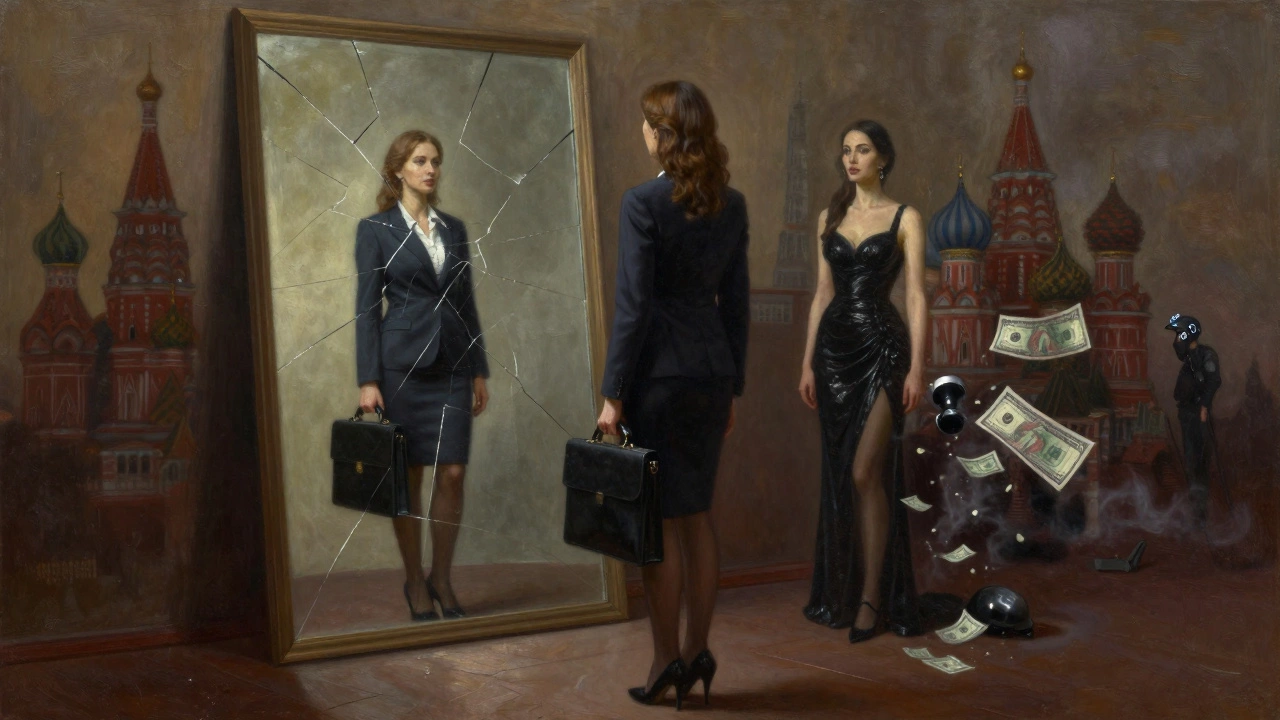
The Hidden Economy
The escort industry in Russia is estimated to generate between $1.2 billion and $2 billion annually, according to independent researchers at the Institute of Social Policy. That’s more than the annual budget of several regional governments. Yet, not a single ruble of that money is taxed. No benefits are paid. No pensions are contributed. The entire economy runs in the dark.
Some women save enough to open small businesses-a café, a beauty salon, a boutique. Others send money home to their families. One woman in Samara used her earnings to pay for her younger brother’s medical treatment after he was diagnosed with leukemia. She never told him where the money came from. "He thinks I work in marketing," she said. "I let him believe that. It’s easier for both of us."
What Could Change?
Legalization isn’t on the political agenda. The government has no interest in regulating the industry-it would mean admitting it exists. But there are signs of slow change. Younger Russians are less judgmental. More women are speaking out anonymously on podcasts. Online forums are starting to discuss legal rights. A few human rights groups are quietly offering legal aid to women arrested for escorting.
The real turning point won’t come from a law. It will come when enough people stop pretending the industry isn’t there. When the media stops portraying escorts as villains. When the police stop treating them as criminals instead of workers. Until then, the system will stay broken, and the women will keep adapting.
One woman in Vladivostok told me: "I don’t want to be a hero. I just want to be left alone. Is that too much to ask?"
That question lingers. Not just in Russia, but in every country where survival and stigma collide.